![]() |
||||
![]() Many US Consumers Are Failing to Protect Their Priceless Information - Education and New Storage Solutions Can Help New poll sponsored by Seagate finds consumers are taking unneccessary risks with their digital assets SCOTTS VALLEY, Calif. - October 22, 2007 - A worldwide consumer survey of adult computer users sponsored by Seagate Technology (NYSE: STX) finds that the US population is well behind the rest of the world when it comes to taking the proper steps to back up their digital files. According to the results of the poll conducted this summer by Harris Interactive®, a little over a third of the adults in the US do not take the risk of losing their digital content seriously. This global poll of consumers also shows that other English-speaking markets are just as far behind the curve as the US when it comes to protecting their digital assets. While US and Great Britain consumers are the most negligent at 35 percent neglecting to make backup copies of digital content stored on their computer to external devices or media, Australia trails close behind with 30 percent of the population not backing up. Of the six international markets surveyed, China leads the world in data backup with 83 percent doing so, followed by France at 81 percent and Germany rounding out the top three with 73 percent taking the proper steps to ensure they’ll have access to their data even in the event of a disc failure or system interruption. The astonishing discovery is that 31 percent of those surveyed are still not backing up even though half of them (50 percent) have experienced the loss of important data in the past. The poll of adult computer users in Great Britain, France, Germany, China, Australia and the United States, finds that the digital files most valued are personal photos (39 percent), followed by text documents and emails (23 percent) financial/business records (14 percent) and more than a third (37 percent) consider their digital content to be “priceless.” However, among those who do not back up, the most frequently cited reason for not protecting these assets is their lack of understanding of how to perform a backup or that backup is too complex of a process (29 percent). Another 24 percent said they don’t think it’s important enough to worry about, 13 percent think it takes too much time, and 9 percent don’t back up because they believe that backup devices are too costly. Eleven percent said they never knew they had to do it. “Educating consumers about the importance of protecting their data is a priority for Seagate,” said James Druckrey, senior vice president and general manager of Seagate Branded Solutions. “While technology has enabled consumers to now become the greatest generators of digital content, even surpassing that of enterprise for the first time in 2006, the complexity of managing these valued assets has also increased. People need to face the fact that digital files are at risk of being lost forever. Seagate is committed to developing storage solutions that make backup and data management effortless tasks, so consumers no longer have to risk losing a single digital photo. ” With the recent explosion of user-generated media due to the popularity of digital cameras and camcorders, there is an enormous amount of content produced in the home that is now irreplaceable. While a spreadsheet or presentation file for business can always be recreated, that digital photo of a child’s first steps captures a moment that will never be repeated. Even with the latest advancements in digital storage management, consumers still need to be better educated about how to backup and the various back up solutions available. Backing up on an external hard drive can now be a seamless process. Whereas, the labor intensive burning of discs requires cataloging and storing those discs in a safe place, those discs can still be lost or damaged. Seagate has five recommendations for consumers to keep their priceless digital assets safe:
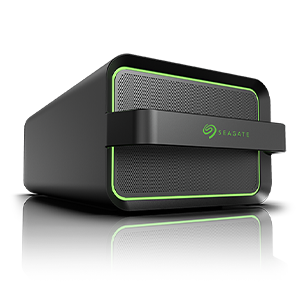
To learn more about the new family of Maxtor OneTouch™ 4 external storage solutions, please visit: http://www.maxtorsolutions.com. Survey Methodology All sample surveys and polls, whether or not they use probability sampling, are subject to multiple sources of error which are most often not possible to quantify or estimate, including sampling error, coverage error, error associated with nonresponse, error associated with question wording and response options, and post-survey weighting and adjustments. Therefore, Harris Interactive avoids the words “margin of error” as they are misleading. All that can be calculated are different possible sampling errors with different probabilities for pure, unweighted, random samples with 100 percent response rates. These are only theoretical because no published polls come close to this ideal. Respondents for this survey were selected from among those who have agreed to participate in Harris Interactive surveys. The data has been weighted to reflect the composition of the adult population in each respective country. Because the sample is based on those who agreed to be invited to participate in the Harris Interactive online research panel, no estimates of theoretical sampling error can be calculated. About Harris Interactive Check out Seagate Podcasts About Seagate Seagate, Seagate Technology, and the Wave logo are registered trademarks of Seagate Technology LLC. Maxtor, OneTouch 4 and FreeAgent are either trademarks or registered trademarks of Seagate Technology LLC or one of its affiliated companies. All other trademarks or registered trademarks are the property of their respective owners. One gigabyte, or GB, equals one billion bytes when referring to hard drive capacity. Accessible capacity may vary depending on operating environment and formatting.
![]() |
![]() |
|||
|
©2009
Seagate Technology LLC | Site Index | About Seagate | Partner Center | Investors
| Contact Us | Privacy Policy
|
||||