Provides access to product training, sales and marketing resources, deal registration, and more to our VARs, Integrators, Resellers and other channel partners.
Large-scale productions push both technology and teams to their limits, yet audiences only see the polished final product — often overlooking the complex workflows and partnerships behind it.
For example, in a recent multi-night concert film (yes, that concert film), what we saw in the theatres was an epic film of superstar quality. But what Blink, Adobe®, QNAP and Seagate saw was the opportunity to solve a major challenge: how can you bring together footage from more than 100 cameras in multiple formats and resolutions, and blend it into a single, continuous viewing experience?
We’ve got the details. Are you … ready for it?
Proxy workflows: the foundation of everything The footage existed in a wide mix of formats and resolutions, resulting from a mix of 4k and 8k capture from drones, cameras and more. This sheer volume and diversity of media made full-resolution editing impractical. So proxy workflows quickly became the backbone of the entire pipeline.
By generating lower resolution versions of each clip, the team ensured editors could work efficiently without overwhelming resources. Traditional tools struggled with some of the formats — particularly drone footage — so an optimised proxy workflow was implemented. With multiple 150 TB RAIDs running in parallel, proxy generation accelerated, allowing editorial work to begin much sooner.
Without proxies, the project simply wouldn’t have been possible.
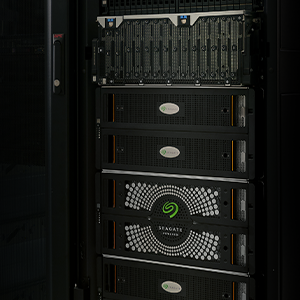
Centralised storage: built for performance Once proxies were created, they were moved to a centralised QNAP NAS environment powered by Seagate IronWolf® Pro drives. This setup provided more than 400 TB of capacity and the bandwidth required to support multiple editors working simultaneously.
But the configuration wasn’t just about capacity. It was about resilience and performance.
RAID 60 offered protection against drive failures, while high-density 24-bay systems enabled smooth playback of dozens of video streams at once. Seagate IronWolf Pro drives delivered the reliability and speed needed to keep the workflow moving under constant load.
Adobe Premiere Pro: collaboration at scale Editorial moved into Adobe Premiere Pro where the complexity shifted from ingest to orchestration. The team built a massive multi-cam sequence from about 100 camera angles and then divided it into manageable segments.
Adobe Productions was essential to the process, as it allowed six editors and multiple assistants to work concurrently without file conflicts or performance slowdowns. By separating projects while maintaining shared access to media, the team avoided the pitfalls of a single, massive project file.
As editing progressed, virtual effects (VFX) were integrated using Adobe After Effects. Rather than relying on dynamic linking at scale, the team adopted a more controlled workflow: exporting high-quality files for VFX vendors and reintegrating them into Premiere with alpha channels intact.
When it came time for final colour and mastering, Premiere’s proxy architecture paid off again. Full-resolution media relinked instantly, allowing the team to transition to finishing without delays.
Planning for the future After delivery, the focus shifted to long-term storage. While proxies were discarded, project files and final deliverables were preserved on Seagate Exos® drives. Designed for real-world practicality, these solutions reflect a shift away from legacy archival methods toward more efficient, modern data management.
Collaboration drives success This project highlights a simple truth: no single tool or team could have solved these challenges alone. By combining Adobe’s collaborative editing environment, QNAP’s scalable storage platforms, Seagate’s high-capacity drives and Blink’s production expertise, the team built a workflow capable of handling extraordinary complexity.
For content creators, post-production teams and technology partners alike, the lesson is clear. With the right strategy and collaboration, even the most demanding productions can be delivered efficiently and at-scale.