In hospitals, autonomous robots are being developed to handle routine physical work such as moving empty beds and supplies between wards, giving caregivers more time for work that requires human judgment and presence. AI-enabled robotics, meanwhile, are being developed to assist surgeons, adapt rehabilitation to individual patients and support other aspects of health care delivery.
On our roads, robo-taxis are beginning to give people another way to get where they need to go, using AI and sensors to navigate without a human driver. For people who can’t drive, autonomous transportation offers another path to independence.
These applications offer just a small glimpse of the growing field of physical AI: intelligent systems that can perceive their surroundings, make decisions and take action in the physical world to help people perform tasks more safely, efficiently or independently.
And we may be seeing just the beginning. Gartner predicts that by 2030, 80 percent of frontline workers employed by international companies will be assisted by physical AI systems, including robots, drones, autonomous vehicles and other embodied systems.
While physical AI is beginning to create tangible benefits for people, it also introduces another challenge that is easy to overlook: the data these systems create may remain useful long after the action that produced it is complete. As the volume of that data grows, so do questions about what organizations retain, where data created across distributed environments should reside, how it is protected and how it remains accessible and available when needed.
Physical AI systems rely on information from an array of sensors, cameras, simulations, models and other inputs to understand their surroundings and determine how to act. As these systems operate, their interactions with the world create new data that can be combined with synthetic data for simulation and validation, used to investigate unexpected events and incorporated into future training and development.
Sensor histories, unusual events, model versions, validation results and other operational data can become useful again for investigation, simulation, validation or model improvement. It may also need to persist as evidence of what happened, which model was in use or how a system performed. Organizations won't always know at the moment of capture which data will prove valuable later.
Collecting that data is only the beginning. Its value depends on whether it remains protected, available and accessible when organizations need to put it to use, even as it moves between operational environments and the infrastructure used to evaluate and improve AI models.
The Storage Equation
As physical AI scales, organizations will face a growing set of decisions about what data merits retention, where it belongs and how readily it needs to return to use.
Not every piece of machine-generated data will warrant the same treatment. Some may need to remain close to an operating system. Some may move to performance-oriented infrastructure for simulation, validation or model development. Other data may warrant longer-term retention because its future value is unknown or because it provides a record of an event, model or system behavior.
Each of these use cases carries different performance and economics considerations. Keeping every retained dataset indefinitely on performance-oriented infrastructure may make little economic sense. The opportunity is to place data according to how it is used while preserving valuable information at an economically sustainable scale.
Those same decisions point toward a layered approach to storage, with different storage technologies serving different performance, access, retention and economic requirements.
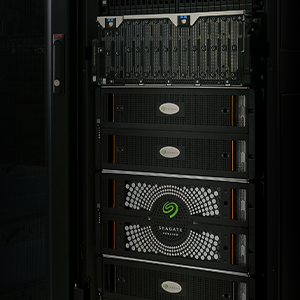
That is where mass-capacity storage becomes consequential. Hard drives can make it economically practical to retain large volumes of machine-generated data over longer periods, preserving more opportunities to investigate past events, improve models, validate systems and put previously created data back to work.
It’s an exciting time for physical AI, with emerging applications offering a glimpse of how intelligent machines could work alongside us in the real world. Making those possibilities practical at scale will require equal attention to the data they create: what merits retention, where it should live and how it can return to use.
The value of physical AI data may extend far beyond the moment it was created. The choices organizations make about retaining and placing that data will help determine how much of its future value remains available to them.
READ MORE: Assess your storage strategy for the AI era