|
CHANGE
556
PRODUCT FIND
All Products
Only Current Products
Interface
Capacity
Family/Model
Number
click here to search
Digital Needs > Making Movies
Making Movies

Scene 1: They Meet

Goodie Goodie Productions was struggling in the highly competitive Philadelphia music market of 1999. When Goodie co-founders Paul Leitner and Giovanni LaRosa got a chance to promote a concert for hip-hop legends Gang Starr, they decided to make the most of the opportunity by documenting the performance on film.

They hired Rich Hoffman of Coyopa Productions as the videographer for the show. One day, while editing Gang Starr footage, Leitner noticed a screenplay sitting on Hoffman’s couch. Leitner was a self-taught filmmaker with several finished scripts. The two started talking about making movies together in the future.

Scene 2: They Film

After attending the Digital Video Expo held in Los Angeles during the fall of 2000, Hoffman was convinced that he could shoot a movie in a low-cost digital format that would allow him to retain artistic control of the product and its distribution. Armed with a digital video camera, a computer and two external hard drives, Goodie Goodie Productions and Coyopa Productions teamed up to make the self-funded Invisible Mountains, a coming-of-age tale about a painter caught in a confusing struggle between his artistic visions and the real world.

In the days of analog film, financing was a major obstacle to would-be filmmakers. People went to film school to gain access to expensive equipment, not to get a degree. It was difficult to produce a successful film without the support of a major studio. Today the main thing you need to make a great movie is talent. Digital storage solutions help you do the rest.


Roll Credits: Paul Leitner’s Top 5 Tips for Making Your Own Movie

  • Capitalize on the digital revolution and understand the medium you’re working with. Greater storage capacities give you greater freedom when making a movie.
  • Experiment. Unlike film, which is expensive, digital video is cheap. Use this to your advantage and expand the creativity of your imagination.
  • Allow your actors to roam in the character’s skin. With digital storage, you’re not limited by the need to develop film for multiple takes. Depending on time limits, you can basically shoot as many takes of a scene as you’d like.
  • Know your audience and your outlets before you begin production.
  • Shoot in high definition, as HD channels are starved for content.

Hoffman and Leitner minimized film expenses by taking advantage of a thriving local film scene. Through open casting calls, GGP found talented local actors who were hungry for exposure and experience. The film team typically worked with a skeleton crew of five. But more than anything else, new technology made the film possible. According to Leitner, “The completion of Invisible Mountains would not have been realized without external hard drives to store and back up digital dailies, edited footage, and eventually the completed movie.”

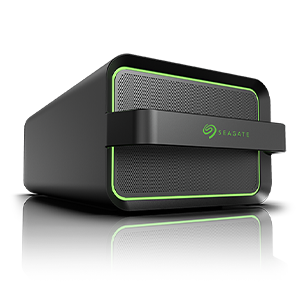
Professional and amateur filmmakers rely on hard drives to expedite their work. Many of today’s affordable digital video (DV) cameras have hard drives integrated right into them. This is a huge advantage. Higher-resolution video can be stored for better quality, and videographers don’t have to worry about accidentally erasing a scene as with tape. Directors can also go directly to a scene they want to review without having to rewind and fast-forward film. And instead of having to roll the video into an editing program in real time—sometimes taking hours—HDD-enabled cameras let filmmakers simply copy digital files into a PC to be stored on hard drives for final editing.

Editing a film is all about making choices. In the old days, those choices had to be made by physically cutting and taping strips of film. It was time consuming and hard to find usable shots. Today’s hard drive technology makes that process a thing of the past. Faster data transfer rates and larger capacities allow you to store, review and manipulate images and sound in real time. Filmmakers are free to concentrate on the story instead of the tools.

Because external storage solutions are getting faster and have more capacity, they also give filmmakers the freedom to integrate more creative elements into their work. For instance, Invisible Mountains incorporated digital animation throughout the film to represent the lead character’s thought processes. Leitner explains, “Animation undoubtedly creates the greatest need for storage space and backup to external drives. Since animation comprises one third of Invisible Mountains, rendering multitudes of layers made external hard drives an absolute must for creating and storing images.”

Hard drives were also used to transfer file formats to a standard that allowed for increased frames per second. The result was a more professional quality product with enhanced visuals. The film was edited at Coyopa studios, which at the time was nothing more than a small converted garage.

Scene 3: Success

Despite the shoestring budget, Invisible Mountains went on to win Best Feature at the 2003 DV Film Fest and was selected as the opening night film for the Festival of Independents “Fest Indies” 2003 Philadelphia Film Festival. Following an official release in 2004, Invisible Mountains was picked up for distribution by independent film-friendly Netflix, where it continues to gain new audiences.

The success of Invisible Mountains might not have happened without the use of digital video and storage. Filming in digital video meant there were no pressures brought on by the high cost of film. This allowed experimentation and multiple takes. It also meant the film could be edited on hard drives without the need for proprietary, dedicated editing equipment.

The End.

Additional Case Studies
Secure Your Memories
Related Product Family
FreeAgent™ Desktop Drive
FreeAgent™ Pro

|
CHANGE
South America North America EMEA APAC