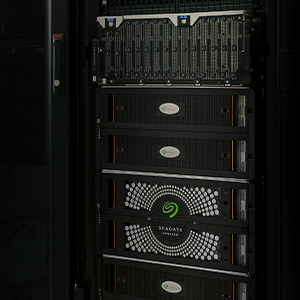
Mozaic delivers the highest capacity hard drives
Whether you’re deploying SMR or CMR in your storage solution, you can scale capacity today with leading mass‑capacity hard drive storage enabled by Mozaic technology. Mozaic technology delivers the highest plug‑and‑play hard drive capacity available today with CMR, and SMR extends that advantage even further for systems designed to use it.
SMR requires a level of architectural control that not every deployment has today. For organisations that are positioned to use it, SMR offers a proven path to unlocking even more terabytes per drive without changing hardware platforms, giving them the absolute maximum capacity possible from the Mozaic family.
Common SMR Workloads
SMR is best suited for workloads that are sequential or easily sequentialised. Examples include large media repositories, backup tiers, compliance archives, and object storage environments where data is written once and read occasionally.
Skills and Characteristics of Effective SMR Solution Providers
Deploying SMR typically requires teams with architectural expertise and control that includes the ability to adapt or manage zone-based storage behaviour and tune the software stack accordingly. Organisations need engineers familiar with SMR-aware file systems, orchestration, and diagnostics so integration proceeds without performance or reliability issues. These skills help ensure the storage layer, monitoring, and operational processes remain aligned with SMR’s sequential ‑write model.
Six Characteristics of Architectural Control
- Control — Ownership of the Storage Software Stack
Providers must be able to modify the storage software stack to ensure storage operations are optimal. Host managed SMR requires control over zone management, write ordering and filesystem selection.
- Application Fit — Write Behaviour at the Top of the Stack
Applications should inherently generate sequential, batched, or append-friendly writes.
- Software Compatibility — SMR-Aware Filesystems & Storage Engines‑Aware Filesystems & Storage Engines
The software layer must understand zoned devices, enforce write pointer rules, and maintain sequential write behaviour.
- Kernel & Host Interface Awareness — ZBC/ZAC Behaviour
Teams must understand how the Linux kernel exposes zone maps and enforces write constraints, ensuring data is written in valid sequences without triggering errors.
- Data Flow Architecture — Batching, Caching, and Metadata Strategy‑Flow Architecture — Batching, Caching and Metadata Strategy
SMR performs best when data flows predictably. Effective pipelines batch writes, buffer data appropriately, and avoid cross zone write amplification — patterns common in log structured or object storage architectures.
- Operational Readiness — Zone Management & Lifecycle Skills
Teams need the expertise to manage zone resets, garbage collection, monitoring and diagnostics.
Benefits of SMR
SMR enables the highest capacity hard drives available, allowing customers to store more data per drive and maximise density within the same footprint. Because SMR increases areal density through track overlay, it delivers these gains without sacrificing reliability or durability. For customers who prioritise cost-efficient scale or datacentric growth, SMR offers an accessible way to expand capacity quickly and predictably, allowing customers to store more data per drive and maximise density within the same footprint.
The Decision is Clear
Seagate’s CMR based drives, especially those built on our Mozaic platform, deliver exceptional TCO, reliability, and density without requiring architectural change. Because of their plug-and-play interoperability, CMR drives are prioritised on product pages and are the same drives available for purchase from our network of global distributors.
If your architecture and team are comfortable with the six characteristics above — controlling the storage stack, ensuring application fit, using SMR-aware software, understanding kernel behaviour, designing predictable data flows, and managing zone-level operations — then SMR can unlock the highest capacity hard drives on the market and help you scale efficiently.
With either path, you can confidently grow your storage footprint using proven Seagate technology.
Are you ready to deploy SMR?
Talk to an expert
Exos
CMR
4 TB, 6 TB, 8 TB, 10 TB, 12 TB, 16 TB, 20 TB, 24 TB
Mozaic HAMR CMR
28 TB, 30 TB, 32 TB
SMR
32 TB, 36 TB, 44 TB
IronWolf
CMR
2 TB, 4 TB, 6 TB, 8 TB, 10 TB, 12 TB, 16 TB
Mozaic HAMR CMR
N/A
SMR
N/A
IronWolf Pro
CMR
2 TB, 4 TB, 6 TB, 8 TB, 10 TB, 12 TB, 16 TB, 20 TB, 24 TB
Mozaic HAMR CMR
28 TB, 30 TB, 32 TB
SMR
N/A
BarraCuda
CMR
12 TB, 16 TB, 20 TB, 24 TB
Mozaic HAMR CMR
12 TB, 16 TB, 20 TB, 24 TB
SMR
4 TB, 8 TB
FireCuda
CMR
1 TB, 2 TB
Mozaic HAMR CMR
–
SMR
N/A
Archive
CMR
–
Mozaic HAMR CMR
–
SMR
8 TB
SkyHawk
CMR
1 TB, 2 TB, 4 TB, 6 TB, 8 TB
Mozaic HAMR CMR
N/A
SMR
N/A
SkyHawk AI
CMR
8 TB, 10 TB, 12 TB, 16 TB, 20 TB, 24 TB
Mozaic HAMR CMR
32 TB
SMR
N/A
Exos E
CMR
600 GB, 1 TB, 1.2 TB, 1.8 TB, 2 TB, 2.4 TB