

Asia-Pacific (APAC)
Europe
Middle East/North Africa
Latin America
North America
我們的加值型經銷商、系統整合商、經銷商及其他通路合作夥伴,可享有產品教育訓練、銷售及行銷資源、交易註冊及其他更多功能,以上都能在這裡取得。

使用 Lyve Cloud 入口網站即可設定和管理您的物件儲存裝置與服務。
為 Direct 客戶提供 B2B 自助工具,例如定價、計劃、訂購、退貨及帳單。
註冊、存取及管理 Lyve Mobile Services、訂閱項目及專案。
為供應商提供各種配合業務需求的自助工具。
Gen 2 superlattice platinum-alloy media
Combating magnetic instability at the nanoscale
Seagate’s second‑generation superlattice platinum‑alloy media improves efficiency while maintaining — and in many cases increasing — areal density.
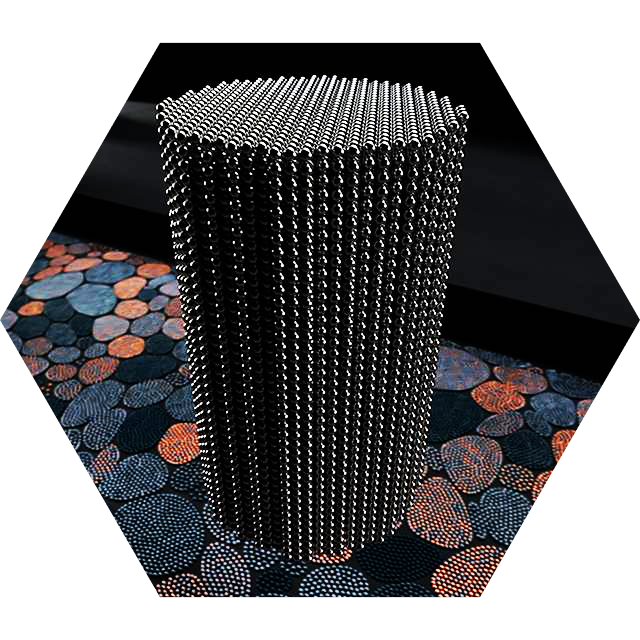
Highly stable magnetic nanoparticles, each acting as a single bit of data, can be packed closer together than in conventional PMR drives or earlier Mozaic™ generations. The result is greater data stability and stronger resistance to thermal fluctuations, enabling higher capacity without compromising reliability.
Within the superlattice platinum-alloy media, each nanoparticle, only a few nanometers in size, acts as an individual bit of data.
This fine granularity is made possible by the media’s high magnetic anisotropy — which means that the magnetic orientation of the material remains steady over time, ensuring that each bit is stable and unaltered by the writing of adjacent data.
This is key to stabilizing the magnetic state of individual bits, thereby reducing their susceptibility to thermal fluctuations.
Its high magnetic anisotropy provides the stability needed for recorded bits achieving record areal densities — bits that are placed together more densely than in any other hard drives in history.
Epitaxial growth is used to deposit FePt thin films on crystalline underlayers on a special glass substrate. These underlayers serve as a template, dictating the orientation and ordering of the FePt grains during the deposition process.
Subsequent annealing at high temperatures further promotes ordering in the FePt grains, leading to a phase transformation that enhances the media's magnetic properties and grain alignment.
脫碳資料報告
AI 時代的資料中心永續性