One of the things I find most interesting about AI is how it can help people discover new insights in information they already have. Scientists have long probed existing datasets to ask new questions, find new answers and pressure-test emerging theories and methods.
Paired with high-performance computing, AI gives researchers another powerful new way to analyze vast amounts of information in the pursuit of knowledge.
It’s already happening across scientific disciplines. In Taiwan, a biotechnology and genomics research organization needed to give researchers simultaneous access to shared datasets for analysis, validation and collaboration while addressing the long-term retention needs of sensitive genomic information.
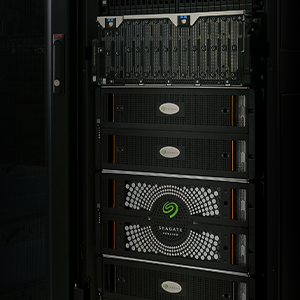
To support that work, the organization centralized its research data on Seagate storage infrastructure, improving access and collaboration while creating room for capacity growth across genome sequencing, genetic testing, precision medicine research and bioinformatics.
New tools, new questions
In science, the data often becomes useful in new and unexpected ways as research questions and analytical techniques evolve. Research at the University of Pennsylvania into new antimicrobial molecules shows how. There, scientists are using deep-learning models to search large genome and protein datasets for potential antimicrobial molecules, including the genomes of living and extinct organisms.
Those same genome and protein databases now support another kind of inquiry: AI-assisted searches for potential antimicrobial molecules. The underlying data already existed, and new analytical tools created another way for researchers to learn from it.
Research also creates the next dataset
The reverse happens too. At MIT’s Engineering Quantum Systems Group, researchers connected AI tools to lab software that runs experiments on superconducting qubits. The AI system ran measurements, analyzed the results and decided what to test next. Each measurement produced new results that shaped the next experiment, which in turn produced even more data.
Researchers in other scientific fields as diverse as neuroscience and cosmology are using AI to generate hypotheses, design experiments and analyze data, according to Stanford University’s Institute for Human-Centered Artificial Intelligence.
When you look at all of these examples, a clear data cycle is emerging. Researchers apply AI and high-performance computing to existing scientific data and make a discovery, creating new information in the process. Some of that new information may then become useful for questions that haven't even been asked yet.
It’s a concept I’ll be thinking about as SC26, which runs Nov. 15–20 in Chicago, approaches. Seagate will be at Booth 1433, where AI, high-performance computing, data and storage will all be part of the conversation.
For me, this all leads back to a pretty simple question: How do we keep valuable scientific data within reach as the tools improve, the questions change and the science advances?
The answer isn’t simply to retain more data. It’s to preserve access to the data that may help answer tomorrow’s scientific questions, even when we don’t know exactly what those questions will be.
That requires deliberate choices about what data remains accessible, where it lives and how economically it can be retained as research needs evolve. It may mean moving data across different storage tiers over its lifecycle, balancing performance, accessibility and cost based on how researchers need to use it.
Keeping discovery within reach
Much of my work involves AI's impact on productivity and efficiency. Science shows another side of its potential: helping people ask new questions, test new theories and challenge old assumptions. We can’t know what tomorrow's researchers will ask. But we can make sure the data is still there and within reach when they do.
READ: See how storage infrastructure can help keep scientific data within reach.