Rethink Storage Strategy for the AI Era
As AI workloads scale, data becomes both the source of intelligence — and the bottleneck that limits it
AI introduces new infrastructure pressures that traditional operating models were never designed to handle
Traditional storage models prioritized retention. AI workloads increasingly prioritize retrieval speed, accessibility and sustained throughput across environments.
As data expands across edge, cloud and core environments, centralized operating models create growing inefficiencies in latency, cost and scalability.
Scaling through footprint expansion alone becomes increasingly expensive as AI environments grow.
Organizations relying on short-term planning often encounter rising operational complexity and slower infrastructure scalability as AI demand accelerates.
Infrastructure, operations, finance and AI leadership increasingly need aligned planning models to scale AI effectively.
To maximize ROI from AI, storage must scale in lockstep with compute investments. If storage lags, compute sits idle, GPUs underperform and productivity stalls. Financial performance is downstream of storage strategy.
Modern AI infrastructure increasingly requires organizations to rethink how data is stored, accessed and scaled.
AI workloads increasingly pull data toward where it’s generated and consumed. Storage strategy must account for where data wants to live, not where it historically lived.
Modern strategies plan for fluid movement and tiering of data across storage environments and media types based on throughput, access patterns, capacity and governance requirements of AI workloads.
As power and space become the primary constraints in AI data centers, terabytes per watt and per square foot are the new optimization metrics for delivering inference economics at scale.
The most durable storage strategies anticipate new data types, workloads and consumption models, aligning storage procurement with AI roadmaps and long‑term capacity planning.
You’ll learn:
Seagate works with many of the world’s most data-driven organizations to help navigate AI-scale infrastructure growth, accessibility and long-term planning.
This framework is designed to help enterprise leaders better understand where infrastructure constraints emerge — and how to prepare for what comes next.
Built for AI-scale data infrastructure
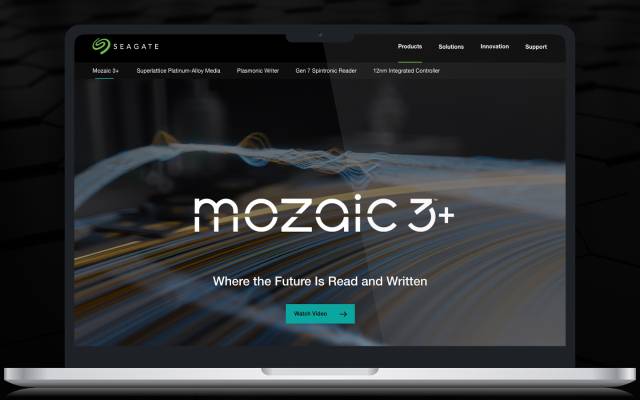
Mozaic™ is a breakthrough hard drive platform that harnesses HAMR technology to deliver extreme storage density at scale, accelerating data center capacity expansion and helping customers keep pace with the rapid surge in AI-driven innovation.
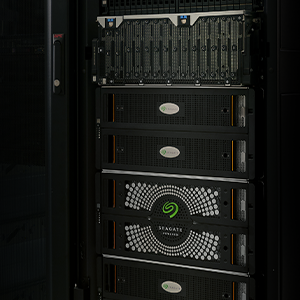
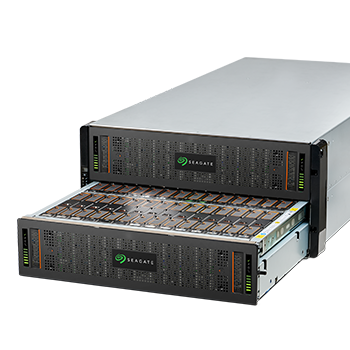
Exos systems integrate Seagate drives and enclosures into a comprehensive portfolio optimized for extreme density, heavy-duty durability and hyper-efficiency.
Seagate’s Exos hard drives deliver extraordinary storage capacity and power efficiency for AI and data-intensive applications in cutting-edge cloud and enterprise environments.